 |
| Contact Us | Current News | Project brief | About Us |

|
||
CMES has been unique among all NGOs working in Bangladesh in incorporating research on technology-developing processes and devices within its efforts. Adaptive research and piloting are undertaken so that useful new technology can be adapted and old ones can be improved for the income generating practices by the students and the graduates. The following trades are currently being practiced:
|
||
| Here is a brief description on some of the technologies being practiced, and have been pioneered by CMES at the grass root level. | ||
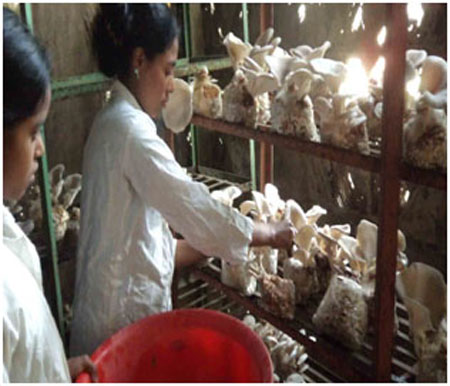
.Mushroom Culture: Mushroom is a kind of fungus, which getting popularity as protein rich food in recent time. In developed countries, it is used as vegetable for many years. In our country it is also being popular. The varieties that are cultivated in our country are Agaricus Bosporus, Pleurotus Ostreatus var. Florida etc. But cultivation of Pleurotus Ostreatus in our country is very well known. The beneficial aspects of mushroom can be divided in their uses such as a food with specific nutritional value and as medicine or tonic for attaining good health, as natural dyes for fabrics for bioremediation of polluted soil or neutralize acidic runoff. In 1997 experimental production of Pleurotus Ostreatus Mushroom was started in the CMES’s own mushroom lab. Since then, this type of mushroom is being cultivated in 16 different areas of the country. The CMES graduates are engaged to produce |
 |
|
mushroom in all the units. There are six Air Conditioned labs and ten mini labs for producing mother spawn and commercial spawn our target group in inexpensive manner. Pot in pot's technology is the cheapest and easiest one technology of CMES, which is more effective to produce mother spawn. By using pot in pot technology in the rural areas where electricity is not available i.e. extreme load shedding there we can produce and mother spawn tissue culture through without Air Conditioned lab.“Sey-Wo-Se" powder mushroom and solar dried mushroom are packaged and marketed by CMES units in district and divisional market. Now, Straw Mushroom is being cultivated in all units with low cost substrate prepared from straw. we are attaining substantial volume of production at a comparatively low cost. |
||
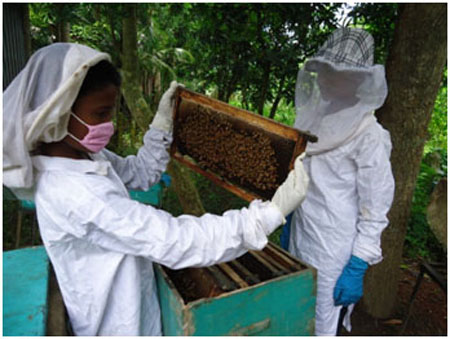
2.Honey bee rearing: Artificial bee keeping also called apiculture which is done by maintaining honeybee colonies in boxes, to collect honey. Honey is a sweet food made by honeybees using nectar from flowers; Bee keeping practices encourage overproduction of honey so that the excess can be taken without endangering the bee colony. Though technology is comparatively rare practice in Bangladesh, CMES has started scientific apiculture at its units. Honey is used in various foods and beverage as sweetener and flavoring. It also has a role in religion and symbolism. At present, the graduates of CMES are successfully producing high quality honey. Flavors of honey vary based on the nectar source. The plants that are used by self- |
 |
|
| employed youth for bee keeping is mustard, sesame, corn, coriander and trees like lichies, tamarind, acacia and mango. They are marketing their honey with CMES brand through CMES's meticulous quality control process | ||
|
||
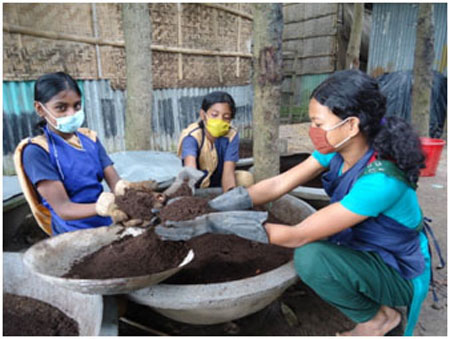
3.Vermicompost: CMES is the pioneer of vermicompost in Bangladesh. At first, researches were done on vermicompost at CMES’s own Lab in 1997 well before production in field units. Now vermicompost is producing at different places i.e. southern, western northern and eastern areas in Bangladesh. CMES’s graduates and disadvantaged adolescents are producing the vermicompost at different rural areas all over the country. They produce more than 40 tons per month. This vermicompost is called Sey-Wo-Se vermicompost. Therefore Sey-Wo-Se vermicompost has been recommended to meet up the requirement of the plant nutrients. |
 |
|
Soil is the main supplier of plant nutrients. Nutrient contents of soil become unbalanced rapidly due to continuous cropping. A limited number of nutrients are applied in excessive quantity as chemical fertilizers to get rapid return or high yield which creates toxicity for microbial community of the soil. As a result, continuous changes take place in the soil fertility condition due to nutrient deficit and increasing toxicity status. In Bangladesh, most of the soils (other than peat soil) have less than 1% organic matter. A good soil should have 2.5% - 5% organic matter which influences the physical, chemical and biological properties of soil. Because, organic matter improves soil structure, water holding capacity and aeration including enhancing droughts resistance capacity. Vermicompost serves food and energy for beneficial organisms like earthworms, Rhizobium, Azolobacteretc. In Bangladesh the major source of organic matter includes animal dung, urine, crop residues, household wastes etc. Converting these organic wastes into compost fertilizer using earthworm is called vermicomposting. Vermicompost plays a significant role in maintaining and enhancing the quality of soil and conserving resources by making crop production through sustainable agriculture. It has a good potential for rural and urban areas, as it is an eco-friendly organic fertilizer. Vermicompost is safe to use for field crops, vegetable crops, tuber crops, spices, pulses oil, fruits and flowers. CMES has successfully disseminated the production of vermicompost in its units and among its graduates. A huge number of graduates are successfully producing and marketing vermicompost in their locality. CMES organizes Farmer's Conventions to make farmers aware about vermicompost and its benefits. CMES is supplying high value vermicompost to local and national markets maintaining its quality and volume. Specially, its role in reaching the rural farmers and other users of the fertilizer through its Sey-wo-se business is really praise-worthy. Certification of vermicompost quality from Department of Agriculture Extension (DAE) under Ministry of Agriculture (MoA) was taken through taking part in several lab tests and field tests with crop yields in their stations which is a major achievement of Technology Department in 2012. Our supplied samples complied with all BARC criteria including the nutrient content. However, ensuring the quality and quantity of the product would be a great challenge by using proper technologies and raw markets. One important thing is providing training to the users of vermicompost on its application procedure where CMES can work in future. |
||
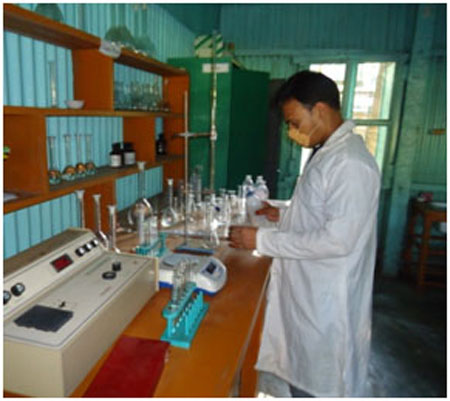
CMES laboratory for Vermicompost testing |
 |
|
| 4.Garments: Cloth is one of the major basic needs of human being. CMES has been producing different types of garments products over two decades to empower its disadvantages adolescents as well as to make quality garments products. CMES’s current students and graduates are producing different types of garments items in its 25 units around the country such as three-piece, two pieces, Fatua, Panjabi, Sarees etc. As per order, we also do ornamental task such as hand stitch, karchupi, aplique etc.for special decoration in dress items. CMES graduates use the technology like Block Batic, Vegetable dying, Batik, Screen print etc. They also produce home items like bed sheets, curtain etc.Considering the capacity of students, we adopt new dress items and designs which are suitable for them. Day by day students and graduates are becoming expert on the garments trade to fulfill the market demand. | 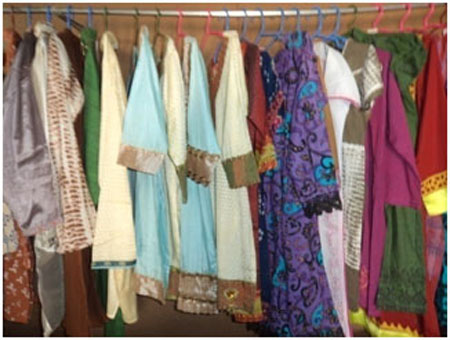 |
|
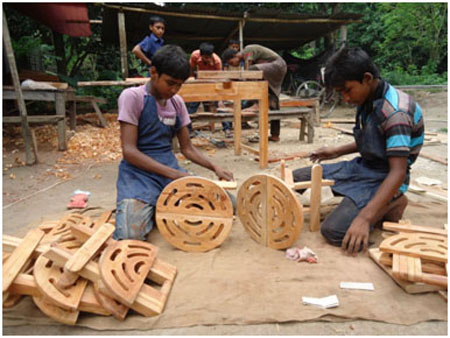
5. Carpentry: To develop the product quality, we organized training on measurement, specification, finishing etc for the graduates. Finding out the increasing market demands of plywood products, we are now producing integrated furniture made of wood, plywood and other raw materials. |
 |
|
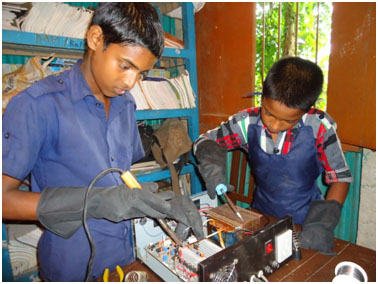
6.Solar electrification:CMES is one of the few NGOs who has taken solar home systems to the rural people not having access to grid electricity. The young graduates fabricate electronic accessories, install the system, explore the market and provide repairing and maintenance services. The systems are made affordable to the customers through a microcredit arrangement. A total of 7070 systems have been already installed. |
 |
|
Small-scale solar drive pump: Power crisis is one of the burning issue in Bangladesh. It effects all sector including farming, industrialization, transport etc. Farming is affected much as most of high yielding varieties need huge amount of water. During irrigation season, our farmers, in broad sense, our economy suffers greatly due to lack of power . Small-scale solar drive irrigation pump can help the poor farmers in remote areas of Bangladesh who are deprived from power and who has to pay a greater amount to the land lord during irrigation period. This pump is operated by solar energy without any break during daytime. It incurs a little amount of expenditure compared to than that of electricity. It is going to open a great opportunity for the poor farmers who have no own pumps and also can be supplementary to the electricity run pumps. |
||
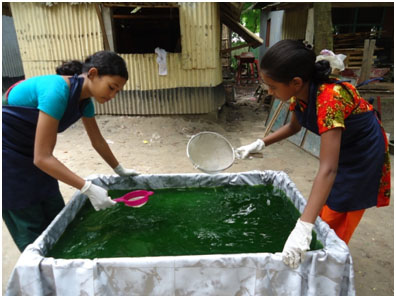
8.Spirulina: In many developed counties microscopic algae spirulina is used to produce protein rich food supplements. Spirulina, a free floating filamentous cyanobacteria naturally occurs in the tropical & subtropical water. Spirulina is highly nutritious because usually it contains high amount of protein (containing between 55% and 77% of dry weight with all essential amino acids), vitamin B1 (thiamine) B2 (riboflavin), B3 (nicotinamide), B6 (Pyridoxine), B9 (folic acid), Vitamin C, Vitamin D, and Vitamin E. After finishing the R&D (Research & Development) it is going to make a large-scale production of spirulina in CMES Jaldhaka, Nilphamari unit and we are working to |
 |
|
spread the technology we have three ponds there and our students have been learning the technology of culture spirulina. Recently spirulina has been introduced at Kayetpara,Gazipur and Damkura, Rajahahi unit.spread the technology we have three ponds there and our students have been learning the technology of culture spirulina. Recently spirulina has been introduced at Kayetpara,Gazipur and Damkura, Rajahahi unit. In 2012, Spirulina was cultivated in Kayetpara unit for the first time. We have a plan to extend its cultivation in Damkura, Khaserhat, Satbaria, Ulipur, Fulbaria, Suruj, Nalitabari and Bakshiganj. Teachers with related trade would be trained for starting Spirulina as a trade. Spirulina, tiny blue green algae, being highly nutritious for human body, can hugely help fighting malnutrition in the country. |
||
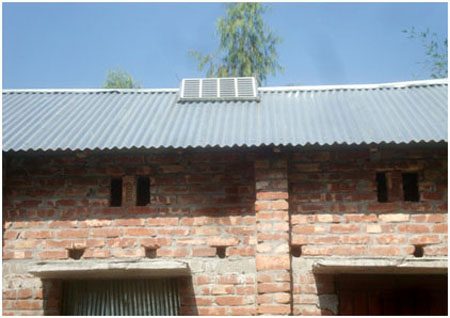
| 9. Solar Electricity for Lighting Remote Areas CMES's solar electricity programme, SEREP (Solar Extension and Renewable Energy Programme) is a recognized and one of the most popular solar system installation programmes in the rural areas of Bangladesh. Since 2003, CMES has been working as a partner organization of IDCOL (Infrastructure Development Company Limited), the Government Financier in renewable energy. SEREP is covering 26 districts at present with a total number of existing installations 7625 up to Dec 2013. Nowadays CMES is working as one of the few active NGOs installing solar home system rural customers. |
 |
|
The regular sizes of SHS are 30 Wp to 85 Wp. Small Solar Home System (SSHS) is referring to 5 Wp -25 Wp systems that are being popular among the marginalized rural people. 10 Wp & 20 Wp systems are already being installed commercially to the field and we are also trying to implement and popularize very low cost 5 Wp systems for the rural households base on new LED technology. CMES established Solar Equipments’ Production Unit to take up adaptive research on accessories assembling to produce Tube Light Ballasts, Charge Controllers, LED Bulbs and invertors etc. The developed components and systems have been put into direct. Use in CMES’s solar electrification marketing project in rural target areas. |
||
| Solar Microutility for rural electrification CMES was involved the R&D and dissemination of Solar Home System (SHS). CMES built up a solar-lab to take up adaptive research on accessories of solar PV system such as tube light ballasts, charge controllers, inverters, income-generating appliances such as sewing machines, drilling machines etc. The developed components and systems have been put into direct use in some of CMES's solar electrification marketing projects in rural target areas. The latter includes the first solar micro-utility in the country in the shape of a village bazaar being electrified by organizing a micro solar electric supply based on daily tariff. Now, CMES is working as one of the few active NGOs who are installing solar home systems for the rural |
|
|
| customers. 7070 solar home systems have already been installed – most of 50 pW power. Now CMES is trying to implement and popularize very low cost 5-W systems for the rural households based on new LED technology. Recently CMES has completed piloting of solar pump system | ||
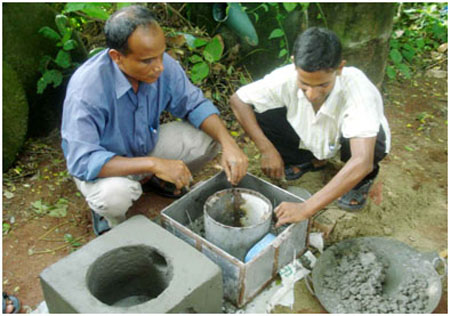
10. Fuel Saving Device: Improved Cooking Stove (ICS) CMES's own contribution in this area is well recognized. It developed the Fuelless 'Um Chula' (the name coined by CMES, meaning warmth)- a stove designed in hay-box principle- capable of saving almost 75% of the fuel. This has been' published in IT Journal, London, and extended through the Basic School System. |
 |
|
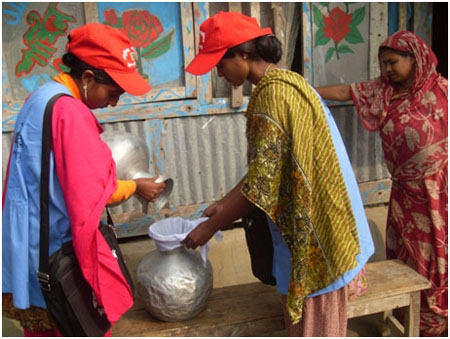
11. Water-Purification By Solar Energy And By Chlorination In 2012, CMES piloted a low cost chlorination of drinking water programme using solar electricity, a method developed by a Swiss Company Antenna WATA. CMES implemented this business model of safe water supply in an extension period for the project during |
 |
|
2012The innovative empowerment programme involved our adolescent and young programme graduates for eco-friendly and eco-promoting technology skills that they used in ensuring safe water supply to the Rural People of Bangladesh by utilizing antenna Watta electric device. The antenna technology uses a small pencil like electronic device which is dipped in a beaker full of ordinary brine (salt solution) and electricity is passed through at a voltage of a few volts for a short time. It creates chlorinated water concentrate by electrolysis process. An interesting fact is that a few milliliters of this concentrate can make some 20 litre water safe to drink.. To achieve this objective, one of the important works was to transfer the technology for safe water. In March a total of 3 CT and 22 SP have gained expertise on Antenna technology. CT and SP are able to prepare accurately saturated brine, prepare exactly 6g/liter of chlorine and perform Jar Test etc. |
||
| Case story | ||